How to Choose the Best Commercial Fridge for a Café or Restaurant
The right commercial fridge keeps your food safe, your staff efficient, and your running costs predictable. For most Australian cafés and restaurants, an upright reach-in fridge or an underbench fridge from a reputable brand (Skope, True, Williams, or similar) will cover the majority of needs — but the correct choice depends on your volume, menu, and kitchen layout. This guide walks you through exactly how to make that decision.
Who Is This Guide For?
This guide is for:
- Café owners buying their first commercial fridge or replacing an existing unit
- Restaurant operators setting up or expanding a kitchen
- Catering operators who need reliable cold storage for prep and service
If you’re a home cook or running a very small micro-business, a domestic fridge may technically suffice — but it won’t hold temperature under load, isn’t rated for commercial use, and will likely void your food safety compliance in most states.
What Types of Commercial Fridges Are Available?
Understanding the categories is step one.
| Fridge Type | Best For | Typical Capacity |
|---|---|---|
| Upright reach-in fridge | General cold storage, bulk prep | 600–1,400 litres |
| Underbench fridge | Under-counter storage, space-limited kitchens | 150–400 litres |
| Sandwich prep fridge | Café/sandwich prep with inserts on top | 100–300L + inserts |
| Deli display fridge | Front-of-house display and retail | 200–800 litres |
| Pass-through fridge | High-volume kitchens, pass-between-stations | 500–1,200 litres |
| Back bar fridge | Bar use, bottle storage | 100–600 litres |
| Cool room / walk-in | High-volume storage | Custom |
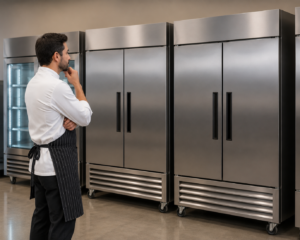
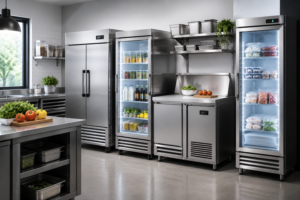
For the typical café or restaurant, the most common purchases are upright reach-in fridges and underbench fridges.
How to Choose the Right Commercial Fridge for Your Business
What Volume of Food Are You Storing?
This is the first question. Estimate how many kilograms of perishable food you hold at any one time, then convert to litres (roughly 1 kg ≈ 1.5–2 litres of storage space with packaging).
- Small café (under 50 seats): 400–700 litres total fridge capacity
- Medium restaurant (50–100 seats): 700–1,200 litres
- High-volume venue (100+ covers): 1,200–2,000+ litres, or multiple units
It’s always better to buy slightly larger than you think you need. Overfilling a fridge compromises airflow, forces the compressor to work harder, and leads to temperature inconsistencies — which is a food safety risk.
Where Will It Go in Your Kitchen?
Kitchen layout matters enormously. Measure your available space before you browse.
- Tight galley kitchen: Underbench fridges maximise your prep surface while keeping cold storage accessible
- Larger kitchen with a separate cool room: Upright fridges work as staging fridges near prep stations
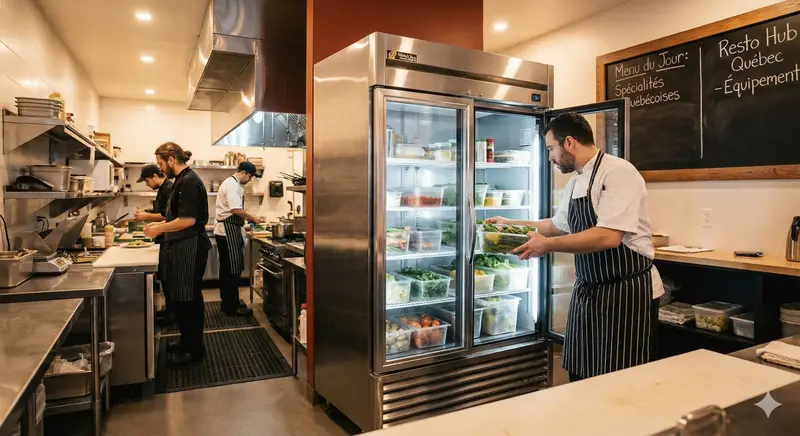
- Front-of-house café: A glass door upright fridge or deli display is both functional and visually appealing
What Temperature Range Do You Need?
Most commercial fridges operate between 0°C and +8°C, which covers standard food storage. But check:
- Fresh meat, seafood: Best stored at 0°C to +3°C
- Dairy, prepared foods: 0°C to +5°C
- Beverages, condiments: 0°C to +8°C is typically fine
If you’re storing a mix of products with very different temperature requirements, consider separate units rather than one large fridge.